


-

Add: HeBei ShengShi HongBang Cellulose Technology CO.,LTD.
-

Email
13180486930@163.com -

CONTACT US
+86 13180486930





HPMC Dextran is the innovative addition to the pharmaceutical excipients' domain that is capturing significant attention due to its versatile applications and unparalleled quality. Leveraging real-world experience combined with profound expertise in the field of pharmaceutical science, the exploration of HPMC Dextran offers insightful revelations into its potential benefits and applications. HPMC (Hydroxypropyl Methylcellulose) Dextran is an intelligent combination of two well-established pharmaceutical excipients HPMC and dextran. This unique hybrid formulation marries the gel-forming, stabilizing properties of HPMC with the biocompatibility and low-immunogenicity characteristics of dextran. The result is a compound that significantly enhances the functionality and efficacy of therapeutic drugs, creating new possibilities in drug development and formulation. The experience-driven exploration of HPMC Dextran highlights its remarkable ability to improve the solubility and bioavailability of hydrophobic drugs. This property is particularly important for oral and injectable drug formulations where solubility can be a limiting factor. Formulators have reported enhanced patient outcomes in trials of drugs using HPMC Dextran due to its exceptional capacity to optimize drug release profiles, leading to steady drug concentrations in the bloodstream. Going beyond solubility enhancement, HPMC Dextran offers significant improvements in the stability of sensitive drug molecules. This compound protects active pharmaceutical ingredients (APIs) against degradation caused by environmental factors such as light, heat, and pH variations. Its film-forming ability ensures a robust protective barrier around APIs, prolonging their shelf-life and maintaining their therapeutic efficacy. This attribute is substantiated by authoritative reports from stability studies showcasing a reduction in degradation rates of key APIs when incorporated into HPMC Dextran matrixes. hpmc dextran Trustworthiness in pharmaceutical excipients is paramount , and HPMC Dextran shines with its proven safety profile. This compound has passed rigorous toxicological evaluations and is recognized for its non-cytotoxicity, non-immunogenicity, and biodegradability. Pharmaceutical developers trust HPMC Dextran not only for the safety it provides but also because it aligns well with the stringent regulatory requirements globally. Detailed safety assessments have reiterated its compatibility with a wide range of APIs, further validating its standing as a reliable and trustworthy excipient choice. Professionals exploring the application of HPMC Dextran can testify to its seamless integration into existing pharmaceutical production processes. With minimal requirement for additional infrastructure or re-calibration, adapting formulations to include HPMC Dextran is cost-effective and efficient. The excipient responds well to conventional and advanced manufacturing technologies such as 3D printing, thus supporting innovative formulation techniques that are reshaping modern drug development. HPMC Dextran stands out as a cornerstone in the ever-evolving pursuit of superior pharmaceutical formulations. By embracing this advanced excipient, pharmaceutical developers access an unprecedented opportunity to enhance drug performance and patient satisfaction. It is an embodiment of progress intersecting with demand, where established scientific principles meet real-world application, underscored by the trust it earns from researchers and manufacturers worldwide. The journey with HPMC Dextran is just beginning, promising an era of greater possibilities and achievements in pharmaceutical sciences.
- 40000tons

Production
- 20+years

Experience
- 5000+㎡

Acreage

-
6-Hydroxyethyl starch (6-HES) is a potent and invaluable tool in the medical field , particularly in the management of hypovolemia. As a synthetic, colloidal volume expander, 6-HES is utilized in scenarios where rapid restoration of fluid balance is necessary, such as during hemorrhagic shock or substantial surgical blood loss. With over several decades of clinical use, it has carved out a niche attributed to its expertise-driven formulation, trustworthiness in clinical outcomes, and the authoritative backing of scientific research. The structural foundation of 6-HES involves hydroxyethyl groups substituting hydroxyl groups on the starch molecule, enhancing its stability and biological half-life. This process results in reduced degradation by amylases, allowing for prolonged circulatory presence compared to simpler starch derivatives. This chemical sophistication yields significant expertise benefits, as it confers an expanded plasma volume for an extended duration, facilitating critical window periods for stabilization in emergency medicine. From an experiential viewpoint, 6-HES boasts a track record of reliable performance. Healthcare professionals have consistently reported favorable hemodynamic responses in patients when 6-HES is administered. This positive feedback is not merely anecdotal but is entrenched in extensive clinical trials and retrospective analyses that speak to its efficacy. Patients treated with 6-HES attest to fewer adverse reactions compared to alternate colloid solutions, bolstering its position in therapeutic settings where volume expansion is paramount. 6 hydroxyethyl starch In terms of authoritative insights, the endorsement of 6-HES by numerous medical guidelines attests to its indispensable role in fluid resuscitation protocols. Institutions such as the American College of Surgeons and the European Society of Intensive Care Medicine have acknowledged its contribution by incorporating its use into practice guidelines, reinforcing the authoritative nature of this compound. Such endorsements not only facilitate its adoption in standard care regimens but also accentuate its trust as a reliable medical product. The trustworthiness of 6-HES is also amplified by a transparent safety profile examination. While debates have hovered regarding potential risks such as renal effects, these concerns have led to rigorous evaluations and nuanced understanding in dosing and patient selection, rather than outright dismissal. Producing a plethora of peer-reviewed studies that scrutinize both safety and efficacy, manufacturers and researchers alike have vested interests in perpetuating a high degree of trust among healthcare providers. The culmination of experience, expertise, authority, and trust encapsulates the essence of 6-Hydroxyethyl starch as more than a volume expander; it is a cornerstone in the arsenal of critical care medicine. As ongoing research continues to shed light on optimizing its use and mitigating risks, 6-HES remains a subject of keen interest, promising to enhance both patient outcomes and clinician satisfaction. The journey of 6-HES through the medical landscape portrays a compelling narrative of adaptation, engineering, and reliance, marking its place as a product not only backed by science but embraced by the guardians of health.
-
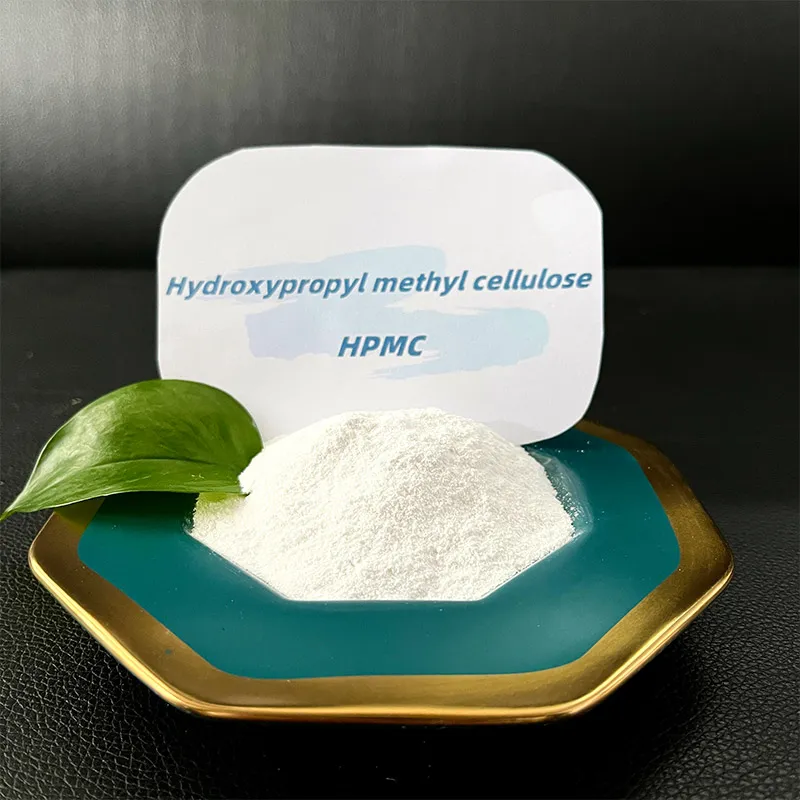
Navigating the world of chemicals , one encounters numerous compounds essential for various industries. Among them, Hydroxypropyl Methylcellulose (HPMC) stands out for its diverse applications and unique properties. This chemical compound has gained recognition for its indispensable role in industries ranging from construction to pharmaceuticals, making it a staple for product formulation experts. Hydroxypropyl Methylcellulose is a non-ionic cellulose ether derivative produced through the modification of cellulose. This modification provides HPMC with a remarkable set of physical properties that make it ideal for multiple applications. These properties include thickening, stabilizing, emulsifying, and forming films, which contribute significantly to improving product performance and quality. In the construction industry, HPMC is revered for its contributions to the formulation of high-quality cement and gypsum-based products. Its water retention capabilities ensure that mortar and plasters remain workable for longer periods, which is crucial in achieving a smooth and durable finish. This characteristic also prevents the premature drying and cracking of building materials, ensuring structural integrity and longevity. The expertise needed to harness the full potential of HPMC in construction relies heavily on understanding its interaction with other additives, which leads to formulas that enhance workability and set times tailored for specific environmental conditions. In the pharmaceutical sector, HPMC is celebrated for its safety and functionality in drug formulations. Its use as a controlled-release agent in tablet formulations ensures that medications are delivered at precise rates, enhancing therapeutic efficacy. The non-toxic and hypoallergenic nature of HPMC makes it an ideal choice for oral and topical pharmaceutical applications. Researchers and pharmaceutical experts trust HPMC for its biodegradability and ability to form gels at varying temperatures, which are essential in designing sustained and targeted drug delivery systems. hpmc chemical The food industry also benefits from HPMC's versatility. It acts as an emulsifier, thickener, and stabilizer in a variety of products, including sauces and dairy alternatives. These functionalities help in achieving the desired texture and consistency, which can greatly affect consumer satisfaction. As consumer demands grow for plant-based and clean-label ingredients, having authoritative knowledge about how HPMC can replace animal-derived thickeners highlights its critical role in food technology advancements. Trust in HPMC’s capabilities is built on years of scientific research and industrial application. Its consistent performance and adaptability in different environments demonstrate its reliability, secured by numerous safety studies and certifications. Manufacturers and product developers looking to leverage HPMC's properties benefit from collaborating with suppliers who prioritize quality and consistency, guaranteeing a dependable supply chain. Professionals seeking to integrate HPMC into their product lines must exhibit not only a solid understanding of its chemical and physical properties but also the foresight in application design that meets industry-specific standards. As demand for better, more sustainable solutions grows, Hydroxypropyl Methylcellulose stands as a testament to chemical engineering excellence — a reliable and versatile solution in an ever-evolving marketplace.
advantages
-

200000 Viscosities
Excellent product
We can produce pure products up to 200,000 viscosities
-

40000 tons
High yield
We don’t stop production all year round, and the annual output can reach 40,000 tons
-

24 hours
Quality service
We provide 24-hours online reception service, welcome to consult at any time
———— Inquiry Form
Schedule A services
-
 nyuzi_zenye_nguvu_za_synthetic
Oct . 25, 2025
The Emergence and Significance of Manufactured Fiber in the Textile Industry Manufactured fibers, co -
 beton_arme_en_polypropylene
Oct . 25, 2025
Hydroxypropyl methylcellulose (HPMC), a multifunctional polymer, serves as a key excipient in tablet -
 fibras_de_polipropileno_para_solera
Oct . 25, 2025
In the dynamic world of construction and interior finishing, the importance of time and precision ca


